
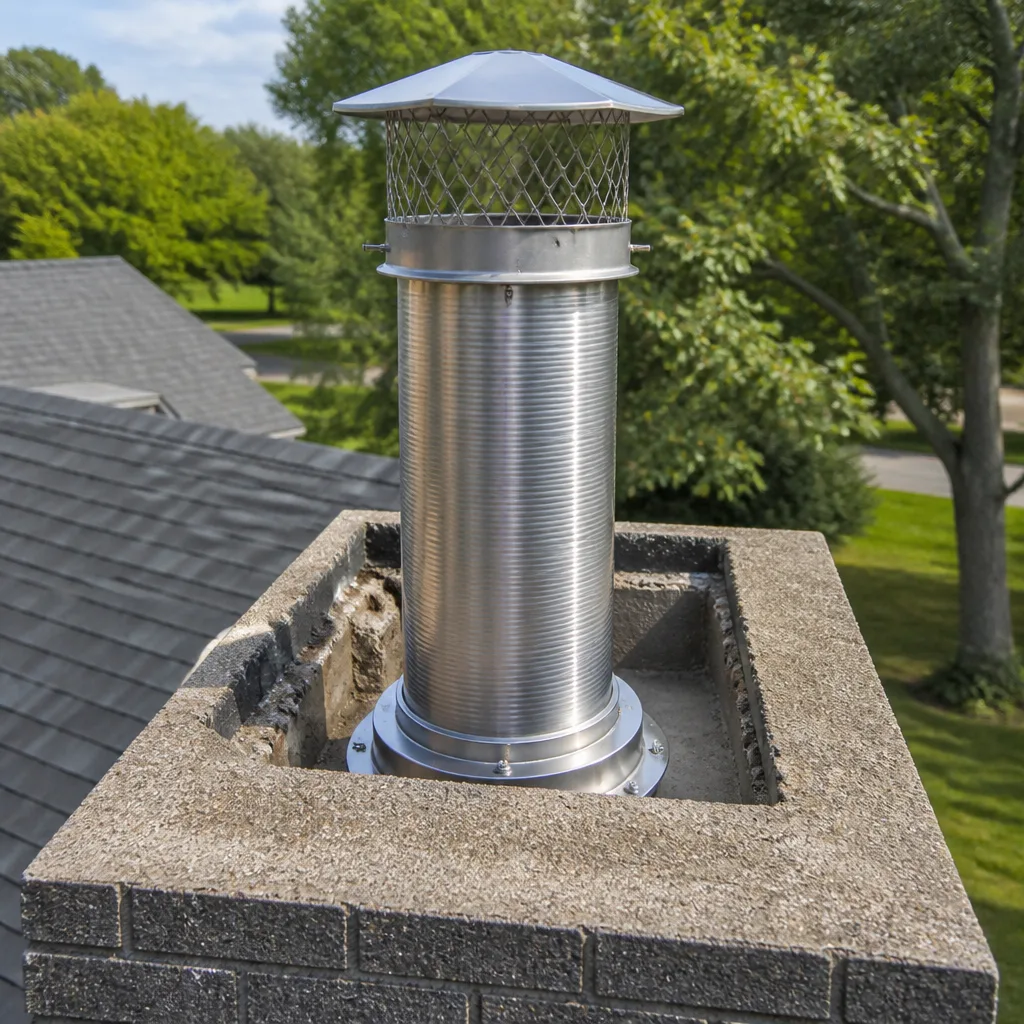
 Flue relining
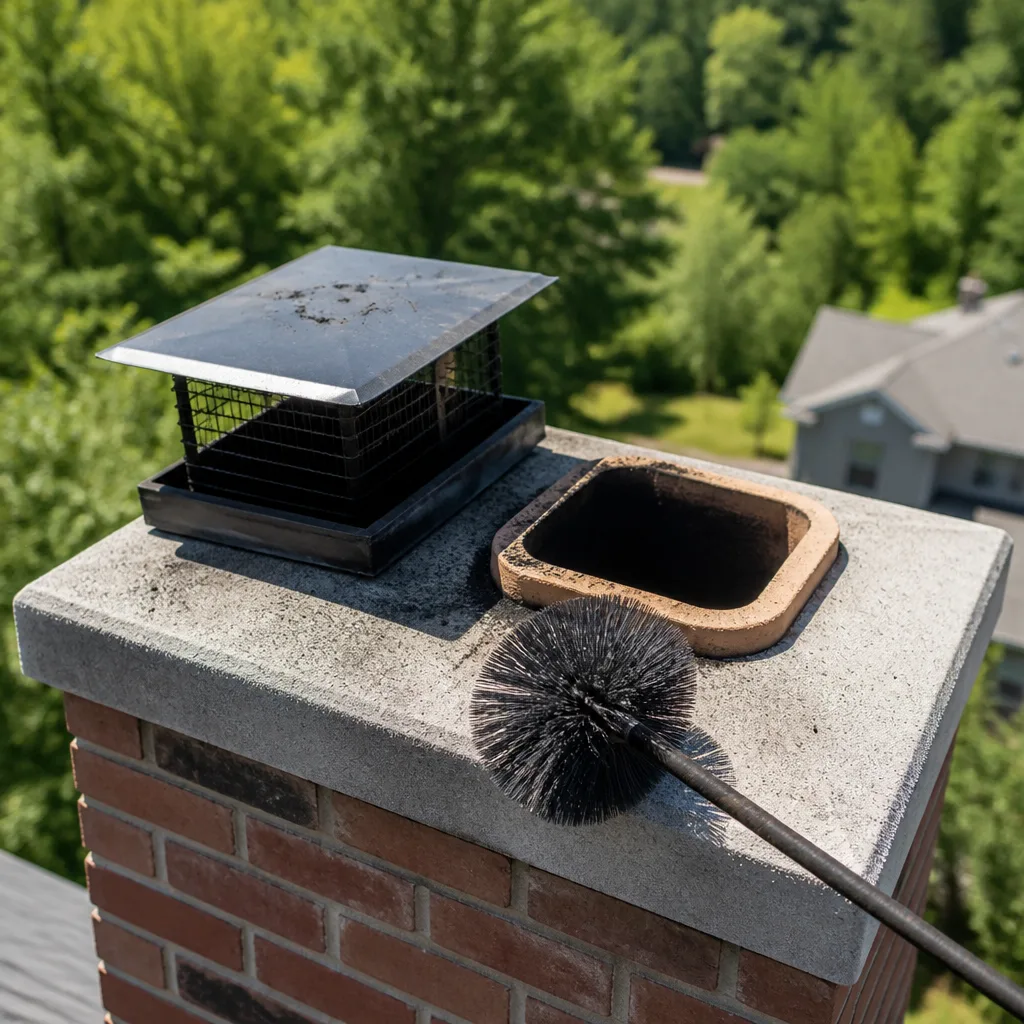 Sweep & inspection
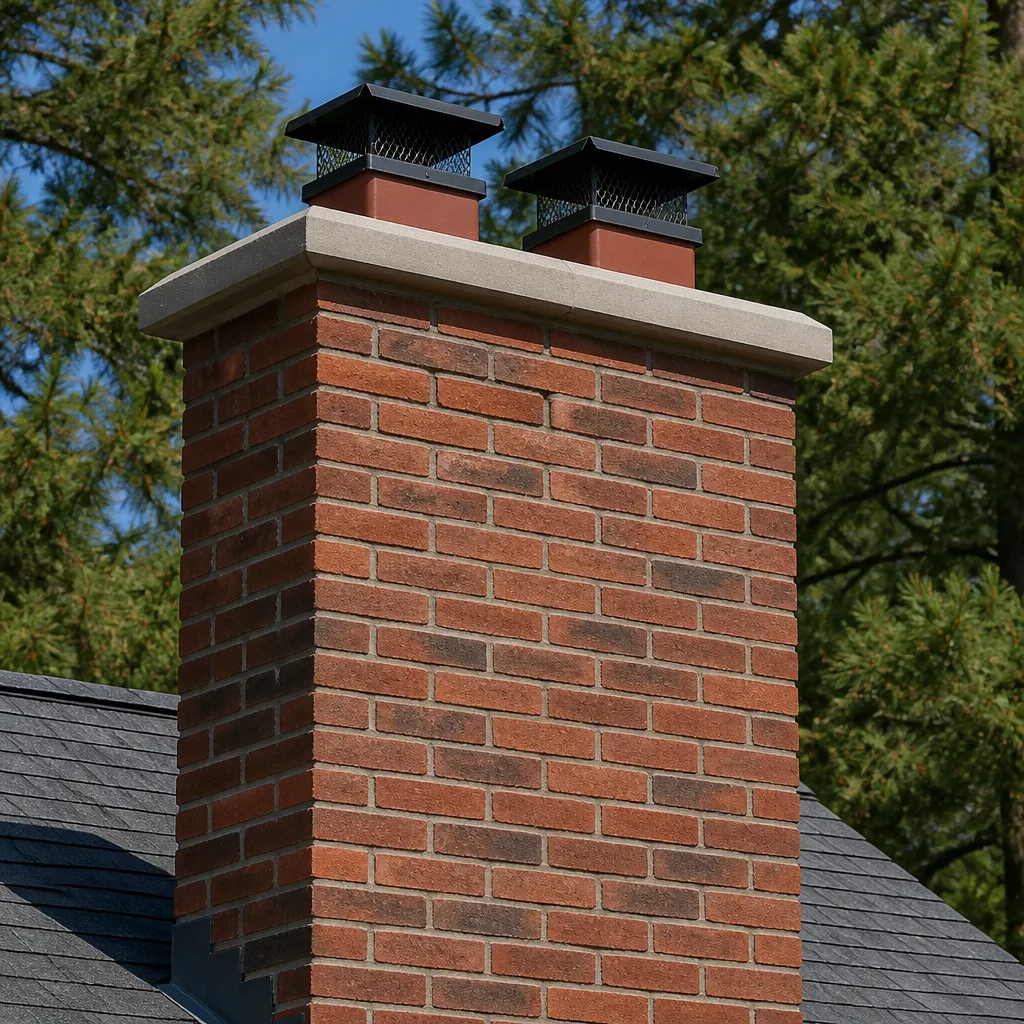 Caps & crowns
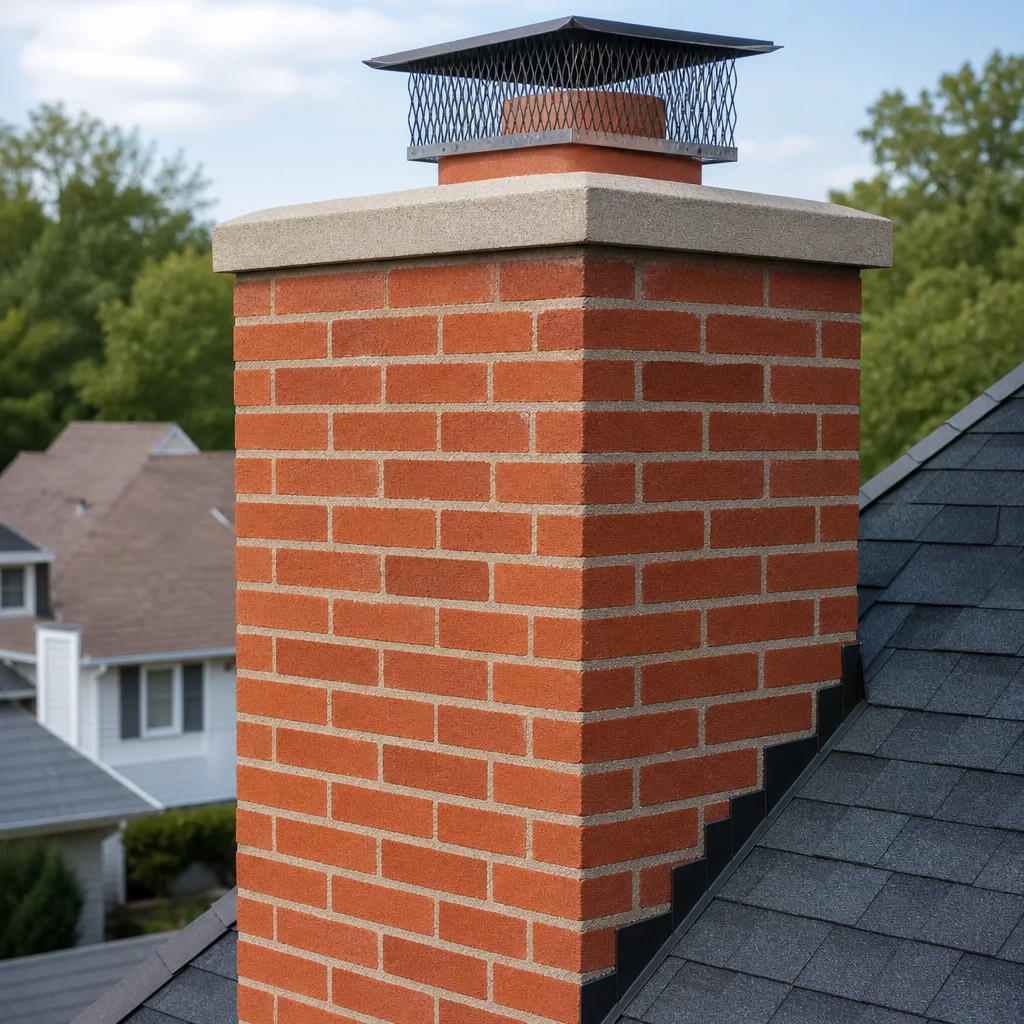 Masonry repair
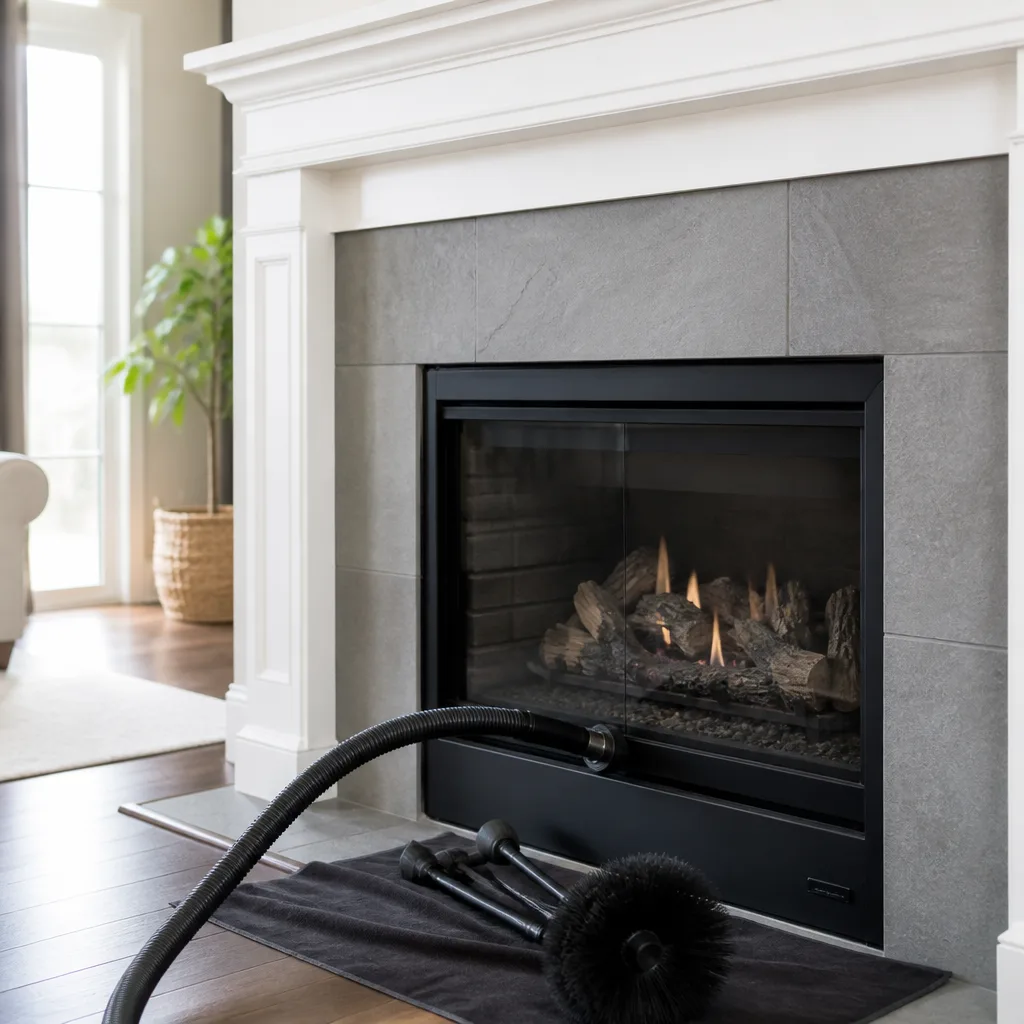 Gas fireplace service
Level 1 sweep and inspection to the NFPA 211 annual standard - flue, crown, cap, and flashing checked and photographed
Chimney sweep logs do not sweep chimneys. They loosen some creosote - which then falls where a brush and vacuum still have to collect it.
HeatShield Flue Liner Replacement: The New York Owner’s Guide
If your HeatShield flue liner has cracked, separated, or failed at a seam, we stock HeatShield-compatible replacement sections and install them throughout New York, typically for $1,900 to $3,400 depending on liner diameter, length, and access. Most HeatShield replacements in New York run one full day on site. You usually find out it failed one of two ways: a chimney sweep points it out during an inspection, or you notice flaky debris at the base of the firebox and a smell that wasn’t there last season.
HeatShield is a cerfractory flue sealant system, not a rigid liner. When the underlying flue shifts or absorbs years of New York freeze-thaw moisture, that sealant can crack and pull away from the flue wall. Once it does, the repair usually means removing the failed section and resealing rather than replacing a physical pipe. That distinction matters for how we quote the job.
- Typical installed price in New York: $1,900 to $3,400
- What you’re paying for: failed section removal, surface prep, HeatShield-compatible cerfractory reseal, cure time
- What we stock: HeatShield joint repair materials on the truck for most standard flue sizes
- Who does the work: our own background-checked technicians, never a subcontractor
Which HeatShield Models This Applies To
HeatShield isn’t sold in rigid model numbers the way stainless liners are. The system is applied to your existing flue, so compatibility comes down to three things: flue dimensions, the condition of the clay or masonry behind the sealant, and whether the original application was a joint repair or a full resurface. If you have the original paperwork from when HeatShield was applied, it will list the flue size and which product was used, usually HeatShield Joint Repair or HeatShield Cerfractory Flue Sealant. That tells us most of what we need before we even get on the roof.
Here’s the gotcha most New York homeowners hit: HeatShield applied over a flue with active water intrusion will fail again no matter how well the replacement section is matched. We won’t reseal over a damp flue wall and call it done. Sometimes the real fix is addressing the crown or flashing first, then doing the liner work. If we find that during the estimate, we’ll say so plainly and price both jobs separately so you can decide.
On the OEM-versus-aftermarket question: HeatShield materials are proprietary, and we use genuine HeatShield-compatible products rather than generic refractory cement. Generic patch materials don’t expand and contract at the same rate as the original HeatShield application. In a New York flue that sees temperature swings from below freezing to over 500 degrees inside a few hours, that mismatch is exactly what causes early failure.
Styles & brands we work with
Signs Your HeatShield Flue Liner Replacement Is Failing
- Flaky gray or white debris in the firebox. This is failed cerfractory material shedding from the flue wall. You’ll see it most after a hot fire, when thermal expansion shakes loose anything that has already separated.
- A musty or acrid smell that gets stronger before a fire, not during. Downdrafting through a cracked segment pulls damp flue odors into the room when the chimney is cold. Once the fire is going, the smell usually fades, which confuses people.
- Visible cracks or gaps in the flue, seen from the roof. If you’re comfortable on a ladder, a flashlight down the flue will show hairline cracks or a section where the HeatShield surface looks pitted or lifted. If you’re not comfortable with roof access, don’t push it. Call us and we’ll camera it from inside.
- Draft problems that got worse over one season. A failing HeatShield surface is rarely a sudden event. It’s usually six months of a fire that’s slightly harder to start, then a smoke rollout on a windy day, then a full draft failure.
- Water staining on the interior flue wall or damper. HeatShield separation creates a path for moisture through the flue wall. That shows up as rust on the damper or drip marks inside the firebox after heavy New York rain.
See the difference
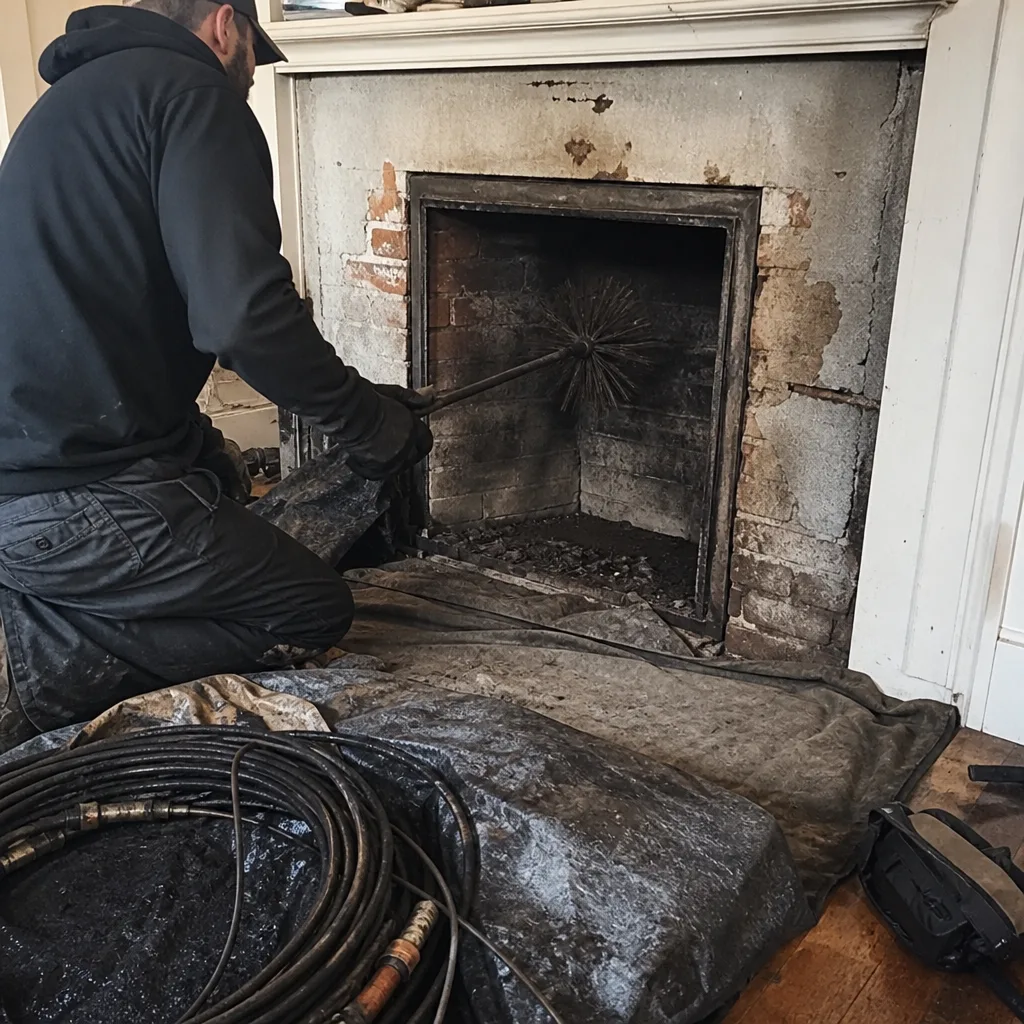 Before
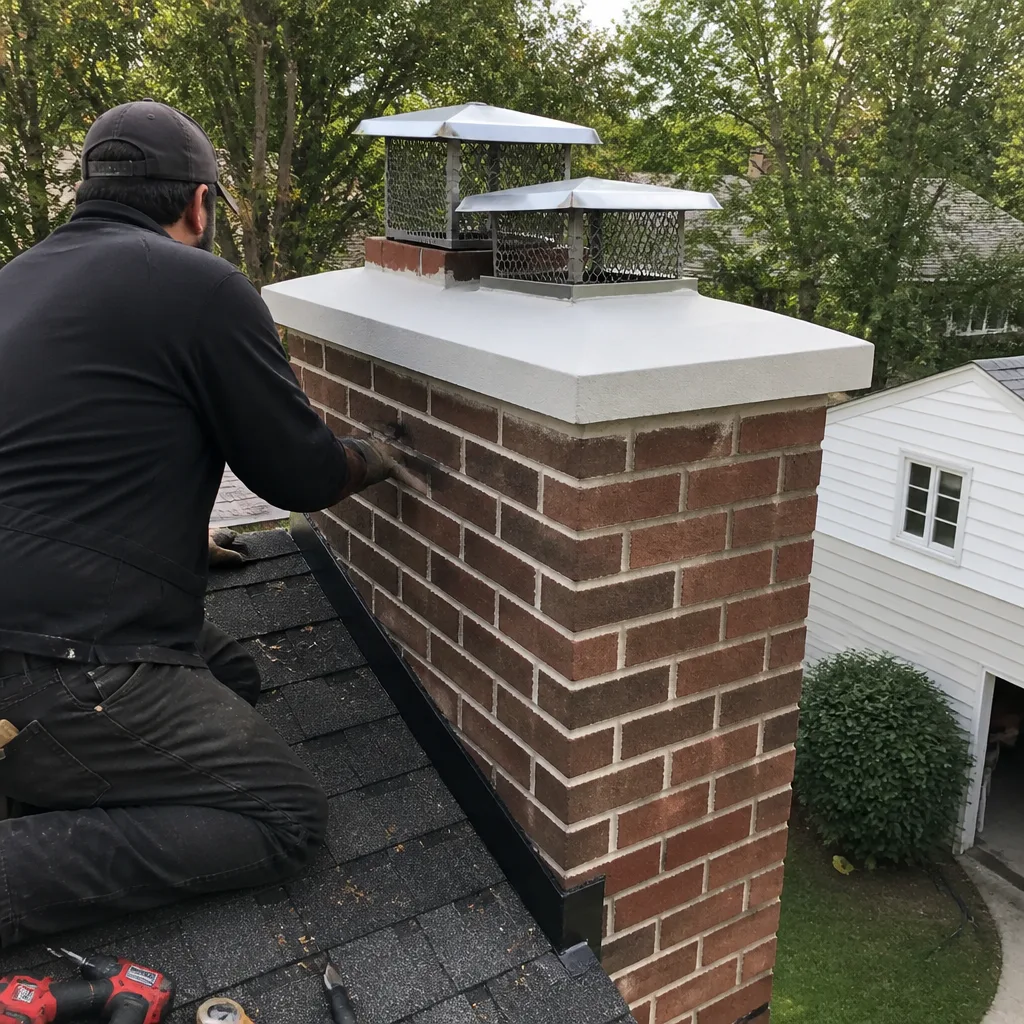 After
After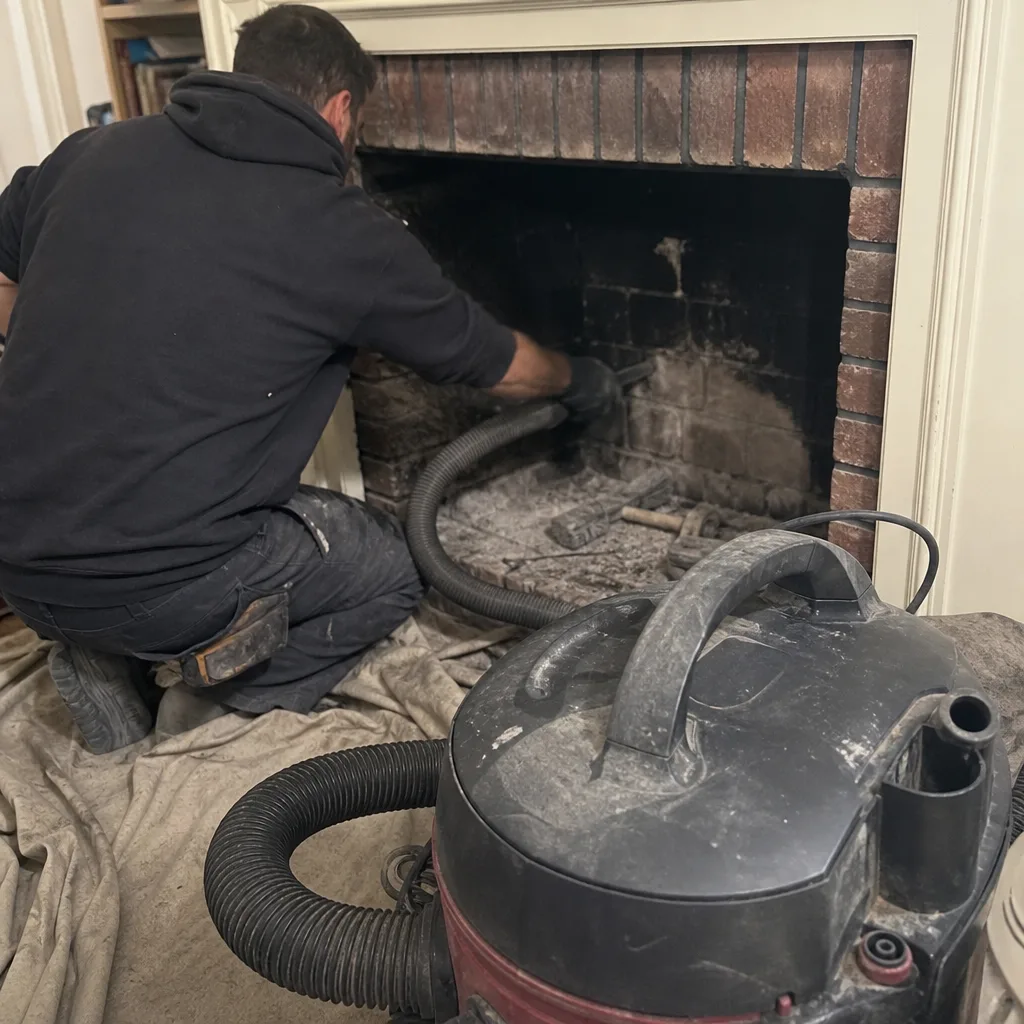 Before
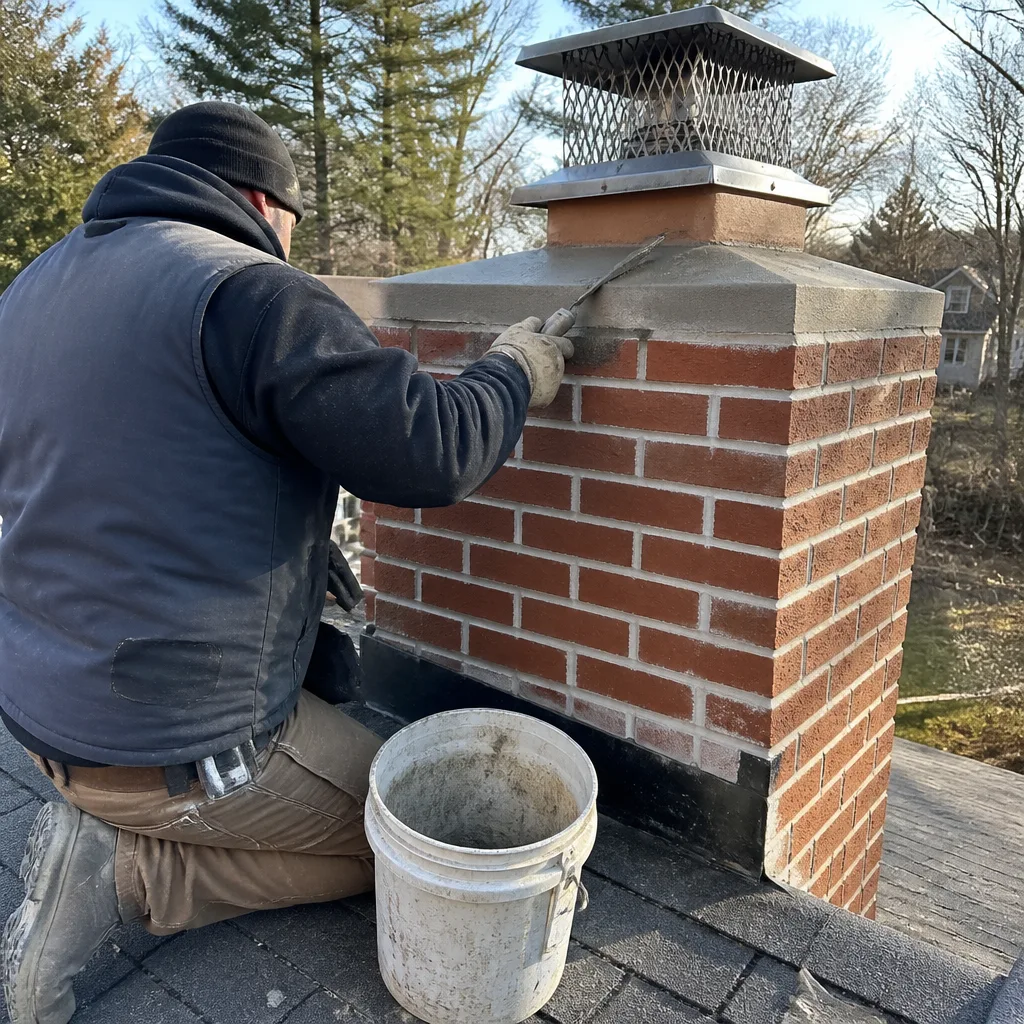 After
After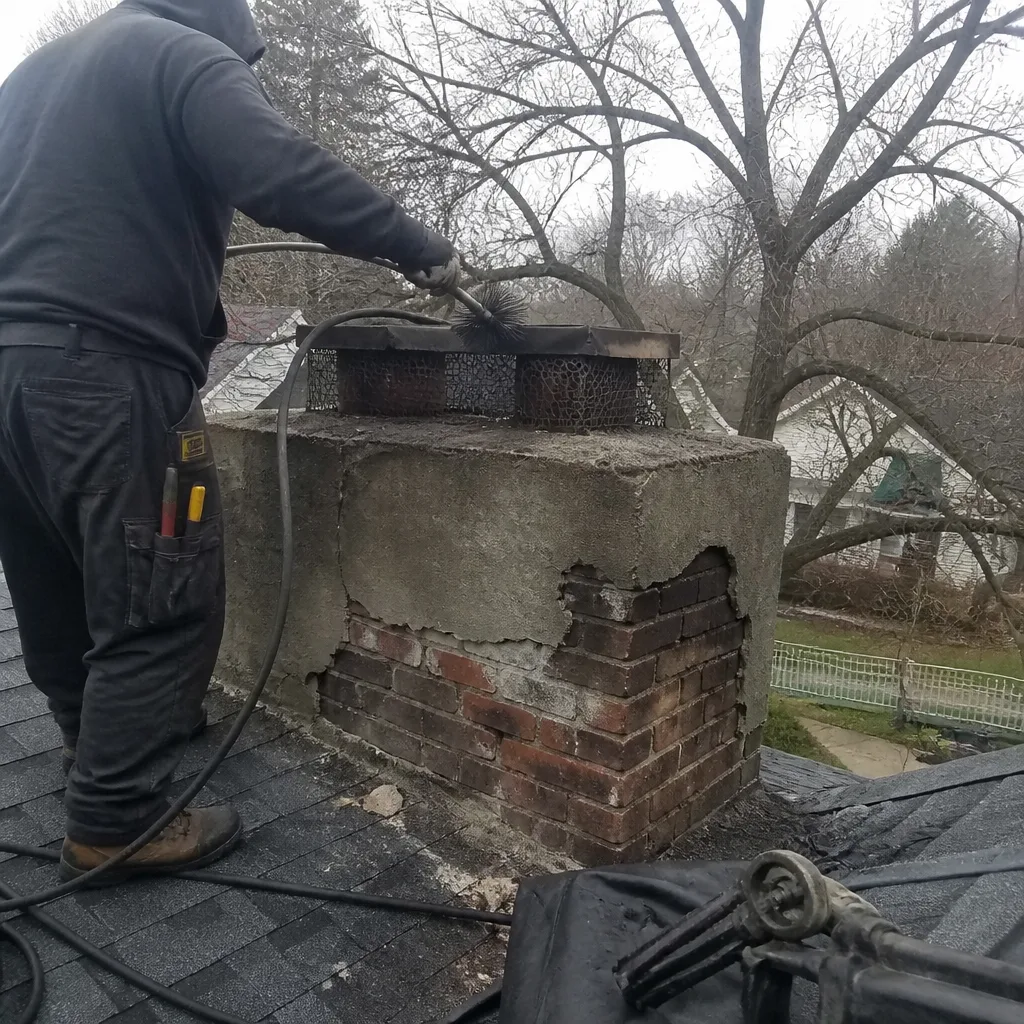 Before
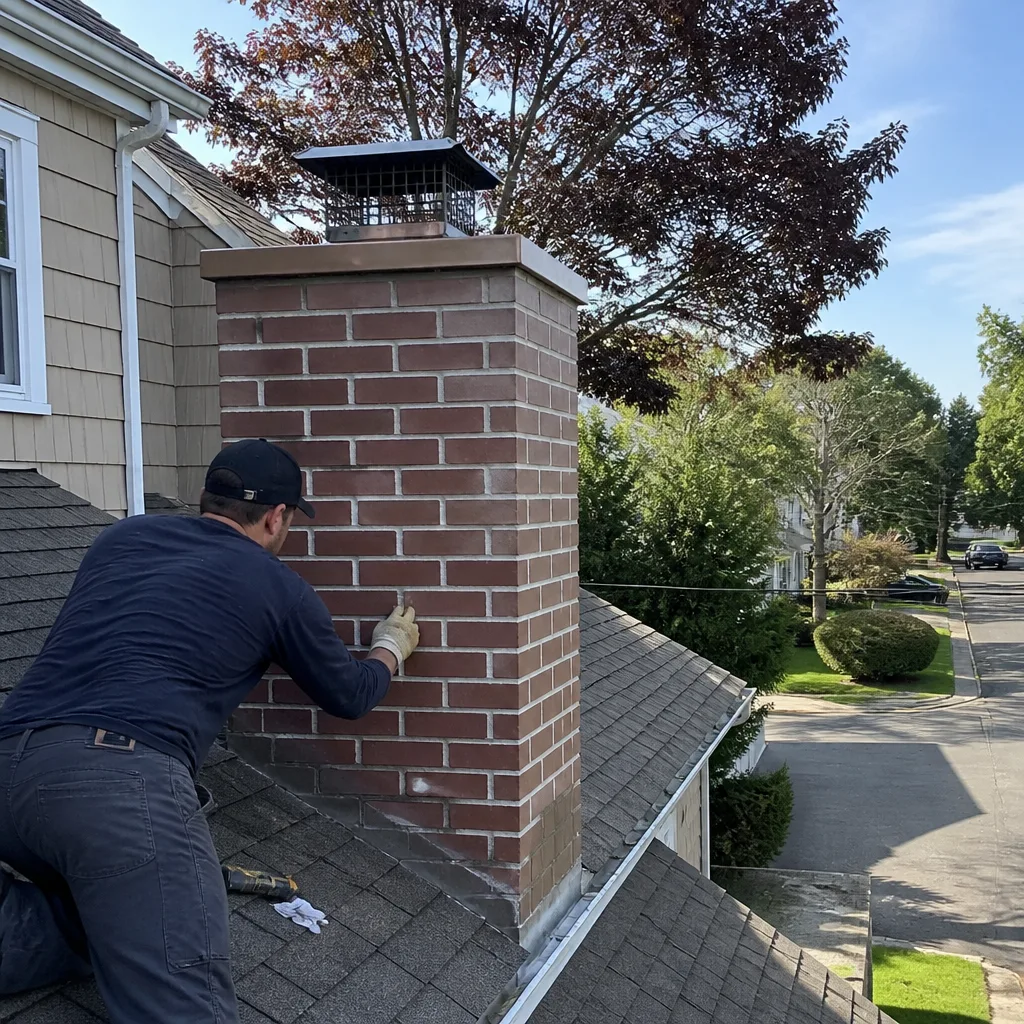 After
AfterReplacement Cost & What’s Included
Most HeatShield flue liner replacements in New York run between $1,900 and $3,400. The range comes down to three things: how much of the flue length failed, what diameter the flue is (larger flues mean more material and more time), and how hard the flue is to access from the roof. A short joint repair at the top of a one-story flue is on the low end. A full-length resurface in a three-story brownstone is at the top.
Every quote from Ashby Chimney New York includes the same things: written price before any work starts, removal of the failed section, surface preparation, the HeatShield-compatible reseal, cure time, and a written guarantee on the repair. Under the Kingswell Guarantee, if the repair fails inside the guarantee period, we come back and correct it at no charge. That’s the whole point of the way we work. Say the price first, put the findings in writing, and let the work speak for itself.
DIY or Call Us?
Here’s the honest split. You can safely do the detective work: check the firebox for debris, note when the smell appears, and take photos through the damper with a flashlight. That helps us quote more accurately over the phone. What you should not do is climb onto a New York roof, remove a chimney cap, and start scraping at flue material. Falls are a real risk, and scraping a failing HeatShield surface without knowing what’s behind it can take a repairable crack and turn it into a full reline.
You also can’t buy genuine HeatShield materials at a retail counter. They’re sold through trained chimney trade channels for a reason. Application requires the right surface prep, the right ambient temperature, and the right cure time. If any one of those is wrong, the new section fails inside a year and you’ve spent a weekend on something we’d have to redo anyway. Plus, flue work is combustion safety work. Carbon monoxide doesn’t care that you meant well.
If you think your HeatShield liner is failing, call (315) 644-2982. We’ll talk through what you’re seeing, give you an honest range before anyone shows up, and schedule a camera inspection so you know exactly what’s going on inside that flue before you spend a dollar.
FAQs
A properly applied HeatShield system in New York typically lasts 15 to 25 years, but that assumes the underlying flue was sound and water intrusion was addressed at the time of application. If water is still getting in, you’ll see failure in five years or less. Call (315) 644-2982 and we’ll camera the flue to tell you which situation you’re in.
Yes, in many cases. If the failure is confined to a seam or a short vertical section and the rest of the HeatShield surface is still bonded, a targeted joint repair is often enough. If the separation is widespread or water damage runs behind the sealant, a full resurface is the honest fix. We’ll show you the camera footage either way.
Most HeatShield replacements in New York take one full day on site, including removal, prep, application, and cure time. If we’re doing a full resurface on a tall or hard-to-access flue, plan for a second day. We’ll tell you before we book the work, not after.
We stock HeatShield-compatible materials for standard flue sizes on our trucks, which means most repairs don’t require a follow-up visit. If your flue is an unusual size or the damage is extensive, we’ll tell you at the estimate and order what’s needed before we start. We also carry parts and materials from DuraFlex and Gelco for chimneys that need a stainless liner instead.
If your HeatShield flue liner is showing signs of failure, don’t wait until the burning season to find out how bad it is. Call Ashby Chimney New York at (315) 644-2982 for a free estimate. Nathan Corliss and the team will give you a written price before any work starts, in language you can actually read.
Written by Nathan Corliss, Owner, Ashby Chimney New York at Ashby Chimney New York, serving New York and nearby areas.