
Last updated October 15, 2026
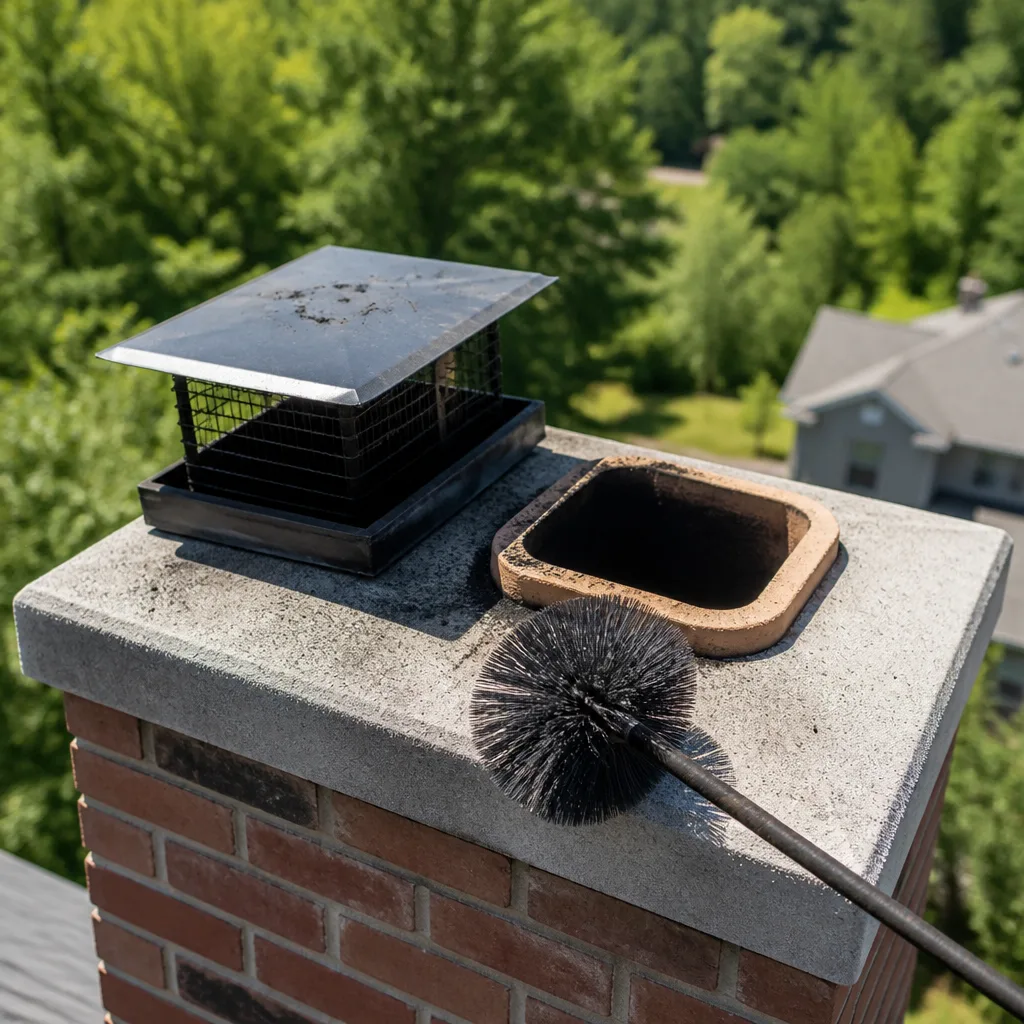 Sweep & inspection
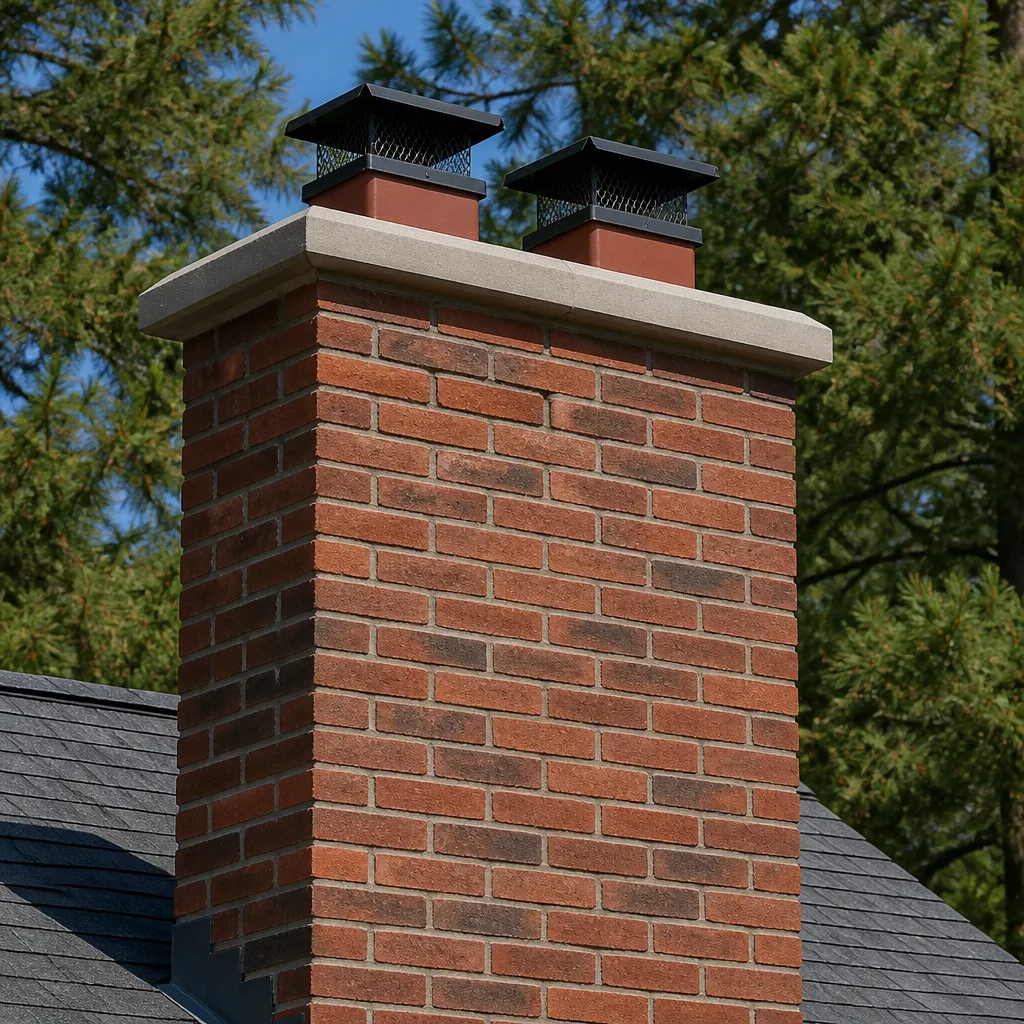 Caps & crowns
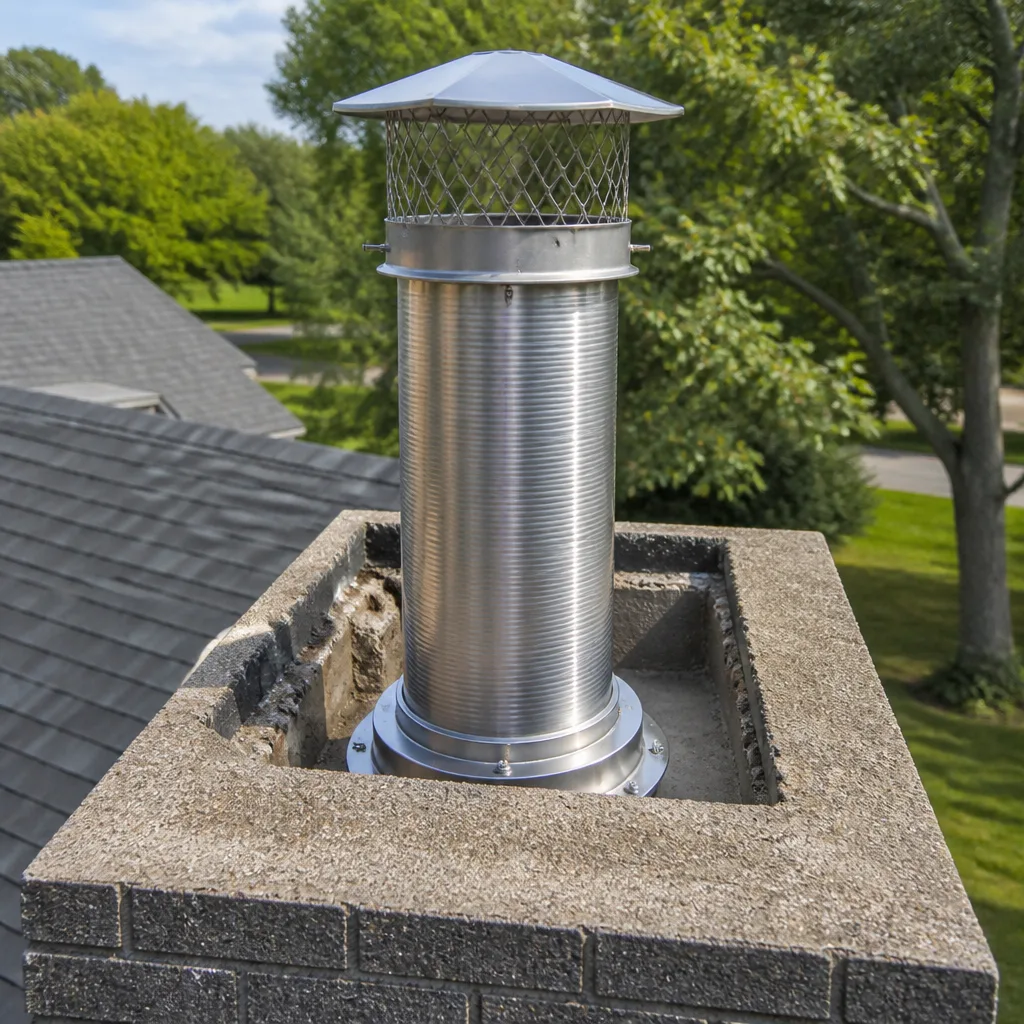 Flue relining
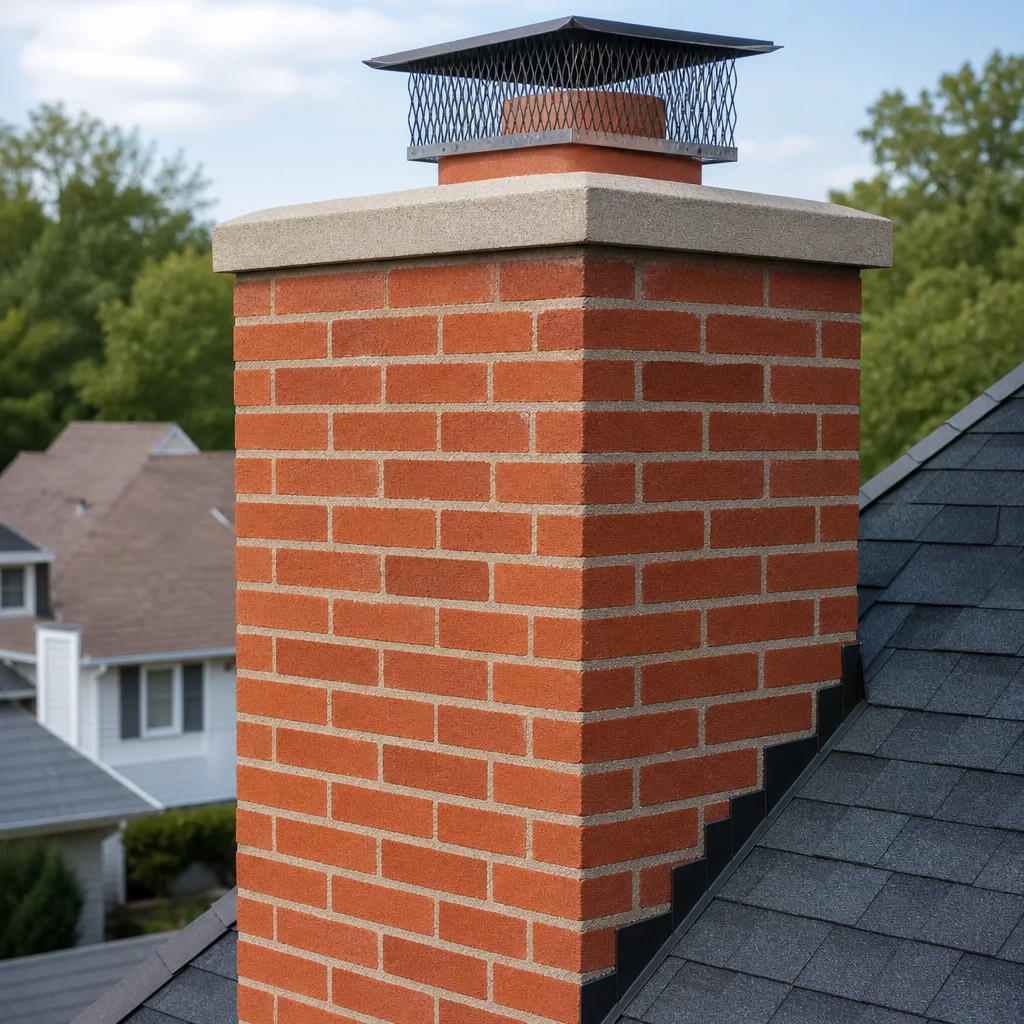 Masonry repair
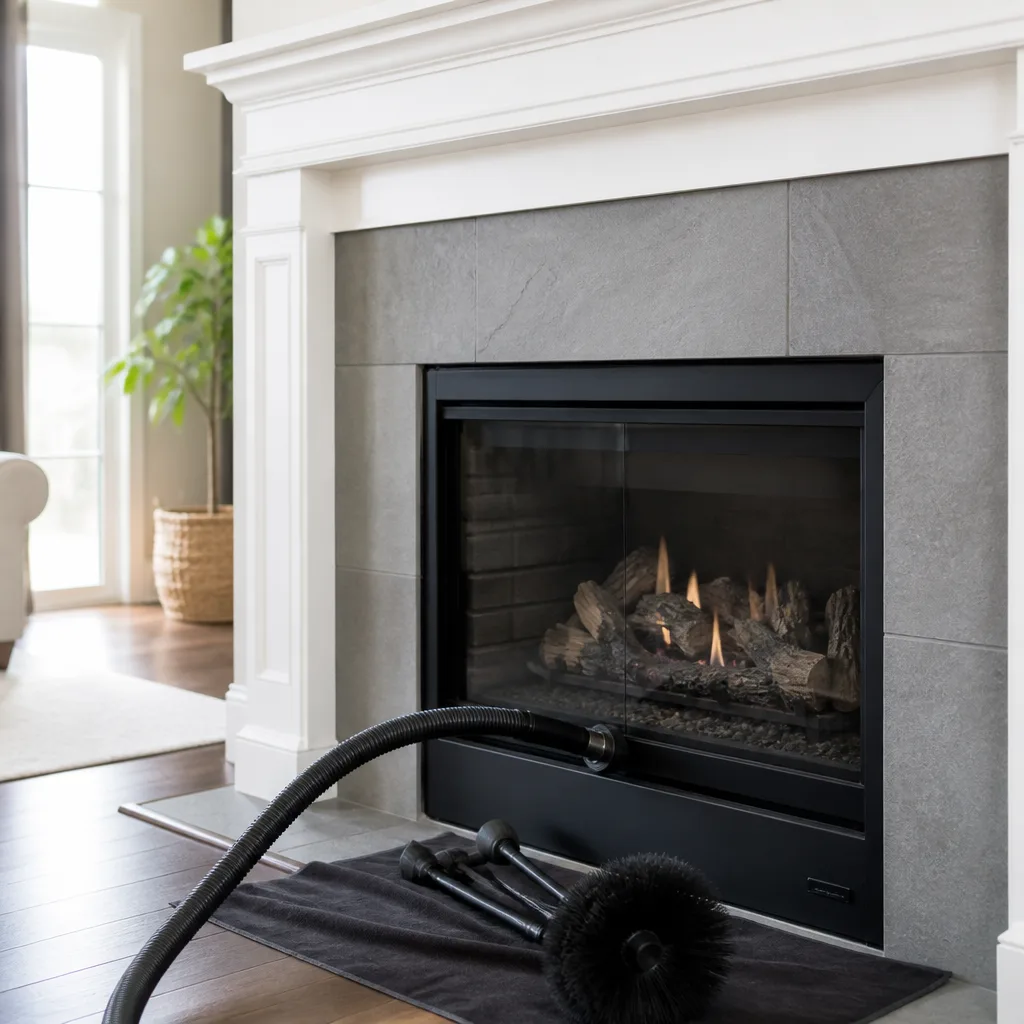 Gas fireplace service
Level 1 sweep and inspection to the NFPA 211 annual standard - flue, crown, cap, and flashing checked and photographed
Chimney sweep logs do not sweep chimneys. They loosen some creosote - which then falls where a brush and vacuum still have to collect it.
DIY vs Professional Chimney Cleaning: The New York Homeowner’s Decision Guide
Most New York homeowners don’t realize that the decision to clean your own chimney isn’t really about the cleaning at all. It’s about what you can’t see. You can buy a complete chimney brush kit on Amazon for under $80 and clean a straight, single-story flue yourself in an afternoon, but if your New York home has a pre-war clay tile liner, a converted gas insert, or a flue shared with a neighbor, that same $80 kit will leave you with a clean brush and an undiagnosed problem that could put your family at risk. This guide walks through exactly when DIY chimney cleaning makes sense, when it doesn’t, what it actually costs either way, and how to think about the one thing a brush can never do. For how to hire a chimney cleaning contractor in New York, see our step-by-step guide.
Quick Answer
DIY chimney cleaning is reasonable for a homeowner with a newer, straight, single-flue chimney who has had a professional inspection within the last three years and owns the right equipment. For most New York homes, especially those with pre-war clay liners, offset flues, shared multi-family chimneys, or systems that haven’t been inspected recently, professional cleaning costs $180 to $350 and includes the camera inspection that DIY cannot replace. The real question isn’t whether you can brush a flue, it’s whether you can verify the flue is safe after you’re done.
Styles & brands we work with
Table of Contents
- What DIY Chimney Cleaning Actually Involves
- The Honest Case for DIY: When It Works
- The Conditions Where DIY Fails
- Real Costs: DIY vs Professional in New York
- The Camera Inspection Problem: What a Brush Can’t See
- New York-Specific DIY Complications
- DIY Maintenance Between Professional Cleanings
- Common Mistakes to Avoid
- When to Call a Professional
- Frequently Asked Questions
What DIY Chimney Cleaning Actually Involves
Before you decide whether to do it yourself, understand what the job actually is. A chimney sweep removes creosote, the tar-like byproduct of burning wood, from the interior walls of your flue. Creosote builds up at different rates depending on what you burn, how hot your fires get, and how often you use the fireplace. Stage one creosote is flaky and brushes off easily. Stage two is crusty and requires more aggressive scraping. Stage three is a hardened, glossy glaze that no consumer brush will remove, it typically requires professional chemical treatments or mechanical removal.
The DIY process looks something like this:
- Inspect the chimney from the roof or ground to identify the flue type and condition.
- Seal the fireplace opening inside with plastic sheeting and tape to contain dust.
- Run a properly sized chimney brush down the flue from the roof, or up from the firebox using a rotary system.
- Brush the full length of the flue, then remove the loosened creosote from the smoke shelf and firebox.
- Vacuum the firebox and surrounding area with a HEPA-filter shop vacuum.
- Visually inspect what you can see, which for most flues is very little.
That last point is the one most DIY guides gloss over. After you brush a flue, you can see the first few feet from the top and the first few feet from the bottom. The middle section of an average 20 to 30 foot New York chimney is invisible to you. You’ve cleaned it, but you haven’t inspected it.
The Honest Case for DIY: When It Works
We’re going to say something most chimney companies won’t: DIY chimney cleaning is genuinely reasonable for certain homeowners in certain situations. If you have a home built in the last 20 years with a prefabricated metal chimney or a straight clay flue in good condition, and you burn well-seasoned hardwood, and you’re comfortable on a roof, and you had a professional Chimney Inspection in New York within the last three years that found no liner damage, then cleaning your own flue with the right brush is a legitimate option.
Here’s the profile of a home where DIY makes sense:
- Single-story or low-slope roof with safe, stable access to the chimney crown.
- Straight flue with no offsets or bends, which you can confirm from the inspection report.
- Smooth metal or clay liner in documented good condition.
- Single-family detached home where you’re the only one using the flue.
- Burning habits that create light creosote: hardwood only, no green wood, no cardboard or trash.
- You already own or are willing to buy a brush kit sized correctly for your flue dimensions.
In our experience, that profile describes maybe 15 percent of the chimneys in New York. If it describes yours, and you’re honest about your comfort level with heights and mess containment, you can save roughly $200 to $300 per cleaning. But the savings come with a tradeoff you need to acknowledge: you’re trading the inspection for the cleaning, and the inspection is the part that actually keeps your house from burning down.
If you want to extend the time between professional visits, ask your sweep about a Chimney Sweep in New York that includes a Level 1 or Level 2 inspection and ask specifically what the camera showed. Getting a professional cleaning with a camera inspection every three years, and doing your own brushing in between, is a defensible approach for the right home. It’s not what most chimney companies will tell you, but it’s true.
The Conditions Where DIY Fails
Now the other side. Most New York homes fall into categories where DIY cleaning ranges from ineffective to actively dangerous. The issue isn’t usually your skill with a brush. It’s the architecture and age of the chimney itself.
Clay Tile Liners in Pre-War Buildings
New York has tens of thousands of pre-war homes and buildings with original clay tile flue liners. These liners are now 80 to 120 years old. Clay tiles crack, shift, and separate over decades of thermal cycling, and the mortar joints between them erode. When you run a brush down a cracked clay liner, you can snag the brush on a displaced tile, lodge it in place, or widen an existing crack. Worse, you’ll finish the job with no idea that the liner was compromised to begin with. The cleaning succeeded. The chimney is still unsafe.
Offset Flues and Multi-Story Runs
Many New York townhouses and brownstones have flues that jog sideways to accommodate floor plans or merge with other flues. A straight brush cannot navigate an offset. You’ll clean the top section and leave the bend untouched, exactly where creosote accumulates most heavily. If your chimney serves multiple fireplaces on different floors, or if it’s a shared flue in a multi-family building, you’re also dealing with creosote deposits from other people’s burning habits, which you can’t see or account for.
Converted Gas Inserts and Fireplaces
If your fireplace was converted to gas, or if you have a gas insert installed in a former wood-burning firebox, DIY cleaning is not a maintenance task, it’s a risk. Gas appliances vent differently, and the clearances and liner requirements are different. Brushing a flue that serves a gas appliance without understanding the venting configuration can dislodge connections, damage the liner, or create a carbon monoxide hazard you won’t detect without a combustion analyzer. This is a job for a professional, full stop.
Systems Not Inspected in Three or More Years
This is the line in the sand. If your chimney hasn’t been professionally inspected in the last three years, do not make DIY cleaning your first act of maintenance. You don’t know what you’re brushing into. You don’t know if the liner is intact, if the crown is cracked, if the flashing is leaking, or if an animal has nested in the flue. Cleaning a chimney with an unknown condition is like changing the oil in a car with a rod knock. The maintenance doesn’t address the actual problem.
Our advice in this situation is specific: book a professional inspection and cleaning, ask for the camera footage, and ask the sweep to tell you plainly whether your flue is a candidate for between-visit DIY cleaning. At Ashby Chimney New York home we answer that question honestly. Sometimes the answer is yes. Often, with older New York stock, it’s no.
Real Costs: DIY vs Professional in New York
Let’s put actual numbers on the table, because most guides talk around this. Here’s what both paths cost in the New York market as of 2026.
DIY Cost Breakdown
- Chimney brush kit with rods: $40 to $120 depending on flue size and rod material. Nylon rods are fine for straight flues. Fiberglass rods flex and can handle slight curves but are more expensive.
- Drop cloths, plastic sheeting, painter’s tape: $15 to $30.
- HEPA-filter shop vacuum: $80 to $200 if you don’t already own one. Standard shop vacs without HEPA filters blow fine creosote dust back into your living space, which is not acceptable in a New York apartment or brownstone.
- Ladder tall enough for safe roof access: $150 to $400 if you don’t own one. In most New York neighborhoods, that’s an extension ladder stored in a closet or basement for eleven months a year.
- Dust mask and safety goggles: $20 to $40. You want an N95 or better. Creosote dust is carcinogenic and you don’t want it in your lungs.
- Total DIY cost, first time: $305 to $790 including equipment you may only use once.
- Repeat DIY cost: $0 to $50 for replacement brushes, plus an afternoon of your time.
The realistic time commitment for a homeowner doing this for the first time is four to six hours, including setup, the cleaning itself, and the cleanup. In a New York brownstone or apartment with limited ventilation and neighbors on the other side of thin walls, the mess management takes longer than the brushing. You’re also committing to climbing on your roof, which in New York means dealing with whatever pitch, parapet, or neighboring building geometry your particular row house presents.
Professional Cost Breakdown in New York
Most chimney sweeps in New York run between $180 and $350 for a standard cleaning and inspection, with the price varying based on flue height, roof access difficulty, and whether the chimney serves one appliance or multiple. That price includes a few things the DIY kit doesn’t:
- Camera inspection of the full flue length, which is the only way to verify liner integrity.
- Creosote removal from the smoke shelf, the ledge inside the firebox that traps debris and is hard to reach from below or above.
- Professional-grade brushes and rotary cleaning equipment sized to your specific flue dimensions.
- Containment and cleanup with commercial vacuums that capture fine dust rather than recirculating it.
- A written report documenting what was found and what, if anything, needs attention.
The honest comparison isn’t $80 versus $300. It’s $305 to $790 for a first-time DIY setup that skips the inspection, versus $180 to $350 for a professional cleaning that includes it. If your goal is simply to save money, the math doesn’t work in DIY’s favor the first year. It only works if you already own the equipment and have a flue that is confirmed safe to brush.
The Camera Inspection Problem: What a Brush Can’t See
Here’s the thing that changes the entire DIY calculus. A chimney brush removes creosote. It does not inspect anything. And in New York, where a significant portion of the housing stock predates World War II, the inspection is the part that matters.
Cracks in a clay tile liner are invisible from the top of the chimney and invisible from the firebox. They happen in the middle of the flue, where thermal stress is highest. A cracked liner allows heat and combustion gases to reach combustible materials in the surrounding structure, and that’s how chimney fires start. It also allows carbon monoxide to seep into wall cavities and occupied rooms. Neither of these problems is detectable with a flashlight and a brush.
Professional chimney companies use a flexible camera that runs the full length of the flue and records what it sees. The footage shows hairline cracks, missing mortar joints, displaced tiles, and gaps between liner sections. In our work across New York, we’ve found liners that looked fine from the top and bottom but were fully separated in the middle, hidden behind fifteen feet of visible flue. That’s not an exaggeration. It’s routine.
This is why our position is consistent: if your chimney hasn’t had a camera inspection in the last three years, that inspection should happen before any cleaning, whether you do the brushing yourself or hire someone. Once you’ve seen the camera footage and confirmed that your liner is intact and your flue is straight, then the DIY question becomes reasonable. Until then, you’re making a decision with incomplete information, and that’s not a position anyone should be in when the stakes are a chimney fire or carbon monoxide poisoning.
New York-Specific DIY Complications
Most DIY chimney guides are written generically, as if every homeowner has a detached house with a driveway and a garage to store ladders. New York is different, and several of those differences directly affect whether DIY is practical or even legal.
Roof Access in Attached Row Houses
In neighborhoods like Park Slope, Bed-Stuy, and the Upper West Side, homes share party walls, and roof access often isn’t what you think it is. Your chimney may be located on a roof plane you can’t safely reach from your own property. It may require crossing a parapet or working from a shared roof deck governed by building rules. If the only way to access your chimney is through a neighbor’s roof or via a hatch with a fixed ladder, DIY cleaning may not be a realistic option regardless of your skill level.
Co-op and Condo Rules
If you live in a co-op or condo in New York, check your building’s alteration agreement and house rules before you climb anything. Many buildings prohibit homeowner-performed mechanical work in shared building systems, and chimneys are classified as shared building systems even when they serve a single unit. Board approval is often required for any work affecting the roof or exterior envelope. Performing unauthorized work in a co-op can trigger fines, and in some buildings, a requirement that you pay for professional remediation of whatever you attempted.
Shared Flue Liability
In attached New York housing stock, a surprising number of chimneys are shared between two or more units. If you brush a shared flue without coordinating with the other users, you’re altering a system that doesn’t belong to you alone. If debris from your cleaning falls into a neighbor’s firebox, or if your brushing dislodges creosote that later ignites, you may be liable. In a multi-family building, professional cleaning with clear documentation of what was done and when is the only defensible approach.
Weather and Seasonality
New York winters are cold, and the burning season is long. Chimneys should be cleaned before the season starts, in early fall. That means doing DIY work on a roof in October, when temperatures can drop fast and wet leaves make surfaces slick. It’s not just a comfort issue. A New York roof in late fall is a working surface that deserves serious respect. Professional sweeps do this work year-round with proper seasonal chimney care and have the equipment and experience to handle roof conditions that most homeowners should walk away from.
DIY Maintenance Between Professional Cleanings
Here’s where the honest middle ground lives. You don’t have to choose between fully DIY and fully professional. There are real maintenance tasks a careful homeowner can handle between professional visits that extend the interval between paid cleanings and keep you connected to the condition of your system.
These are the tasks we tell New York homeowners are genuinely theirs to do:
- Clear the firebox after every burn. Remove ash and unburned wood debris with a metal scoop and a metal container. Don’t vacuum unless you have a HEPA filter. Let the ash cool for at least 24 hours first.
- Check the damper monthly during burning season. Open and close it fully. If it sticks, wobbles, or doesn’t seal, that’s a repair item to note. A damper that doesn’t seal properly lets heated air escape up the flue when the fireplace isn’t in use.
- Inspect the chimney crown from ground level with binoculars. Look for cracks, spalling, or missing sections. In New York’s freeze-thaw climate, crowns crack regularly. You’re not looking for a reason to climb up. You’re looking for a reason to call someone.
- Check the flashing where the chimney meets the roof. From the ground or a safe ladder position, look for lifted, rusted, or missing flashing. Water intrusion through failed flashing causes more chimney damage than fires do in New York.
- Burn only seasoned hardwood. Wood that’s been split and stacked for at least six to twelve months burns hotter and produces less creosote. In New York, where seasoned firewood is easy to find in most suburbs and parts of the outer boroughs, there’s no reason to burn green wood.
- Track your burning volume. If you burn more than a cord of wood per season, you probably need professional cleaning more often than the standard once-per-year recommendation. Note how much you burn and discuss it with your sweep.
None of these tasks require a roof. None require special equipment beyond a metal ash bucket and a pair of binoculars. And all of them catch the kind of problems that, left unaddressed, turn into $3,000 repairs instead of $300 cleanings. If you want to be hands-on with your chimney, this is the place to do it.
Common Mistakes to Avoid
- Buying a brush kit without knowing your flue dimensions. Brushes are sized specifically. A brush too small won’t clean effectively. A brush too large will jam in the flue and may require professional extraction. Measure the flue or get the dimensions from your last inspection report before ordering anything.
- Skipping the containment setup. Creosote dust is fine, black, and gets everywhere. In a New York apartment or brownstone with neighbors on the other side of the wall, sealing the fireplace opening with plastic and tape is not optional. The hour you save by skipping it becomes five hours of cleaning soot from your living room.
- Using a standard shop vacuum for cleanup. Without a HEPA filter, a shop vacuum exhausts fine creosote particles back into the air. You’ll spread the mess you’re trying to contain. HEPA is the minimum standard for chimney dust.
- Cleaning a flue that hasn’t been inspected. This is the big one. Brushing a compromised flue can make existing damage worse, and you won’t know it happened. Inspection first, cleaning second, every single time.
- Attempting to remove stage three creosote glaze with a brush. Hardened glaze will snap brush tines and resist everything a consumer kit can throw at it. Professional treatment with chemical or mechanical methods is the only way to remove it. If you see a shiny, tar-like coating on your flue walls, stop and call someone.
- Ignoring co-op and condo rules about roof work. New York co-ops take building system work seriously, and unauthorized rooftop activity can put you in a dispute with your board, not to mention a dangerous position on a roof you may not legitimately be allowed to access.
- Treating gas appliance flues like wood-burning flues. Gas vents operate under different rules for clearance, liner material, and safety. If you’re cleaning a flue that serves a gas furnace, boiler, or water heater, this is not the same job as a wood fireplace. Professional only.
When to Call a Professional
Call a professional if your chimney hasn’t been inspected in the last three years, if you have a pre-war clay tile liner, if your flue has offsets or serves multiple fireplaces, if you live in an attached row house with limited roof access, or if your building is a co-op or condo with rules about rooftop work. Also call if you see signs of trouble: white staining on the exterior brick, smoke entering the room, a strong odor even when the fireplace is cold, or creosote that looks shiny and hardened. Ashby Chimney New York offers free estimates throughout New York, and every job starts with a written price before any work begins. Call (315) 644-2982 to schedule a cleaning and inspection, or to talk through whether your specific chimney is a DIY candidate.
Frequently Asked Questions
Most chimney sweeps in New York run between $180 and $350 for a standard cleaning and Level 1 inspection, with the price depending on flue height, roof access difficulty, and whether the chimney serves one appliance or multiple. Ashby Chimney New York writes the price down before any work starts, so the number you’re quoted is the number you pay. Call (315) 644-2982 for an exact quote, estimates are free.
Yes, if your home fits a specific profile: newer construction, straight single-flue system, liner confirmed intact by a camera inspection within the last three years, single-family detached, and you’re comfortable on the roof. If any of those conditions isn’t met, the risks of DIY outweigh the savings, and professional cleaning with a camera inspection is the safer call.
Not necessarily. Cracked clay tiles are serious and should be addressed, but depending on the extent and location of the damage, options like stainless steel liner installation with DuraFlex or HeatShield resurfacing may be viable. The key is seeing the camera footage yourself before agreeing to any repair. A reputable sweep will show you exactly what they’re seeing and explain why a repair is or isn’t needed. If someone recommends a liner replacement without camera evidence, get a second opinion.
Once per year if you burn wood regularly, or every cord of wood burned, whichever comes first. Light users who burn a few fires per season may extend to 18 to 24 months if they’ve had a clean camera inspection and burn only seasoned hardwood. Gas fireplaces and furnaces should be inspected annually by a professional, though they typically need less frequent cleaning than wood-burning systems.
Creosote accumulates, and creosote is combustible. When it ignites, it burns at temperatures that can crack liners and spread to the surrounding structure. Even without a fire, heavy creosote can restrict airflow, causing smoke to back up into the home and carbon monoxide to accumulate. In New York’s older housing stock, where chimneys are often shared or run through combustible framing, skipped cleanings are the single most preventable cause of chimney-related house fires.
It depends on your building’s rules. Many New York co-ops and condos classify chimneys as shared building systems and prohibit homeowner-performed mechanical work on the roof or exterior envelope. Before attempting DIY cleaning in a multi-family building, check your alteration agreement and confirm with your board. In most cases, professional cleaning with documented insurance and a written report is the only approach boards will accept, and it protects you from liability if something goes wrong.
The Bottom Line
DIY chimney cleaning isn’t a scam and it isn’t universally dangerous. For a specific subset of New York homeowners, straight flues, recent inspections, safe roof access, it’s a legitimate way to save a couple hundred dollars a year. But the savings only hold if you’re honest about what you’re trading away: a camera inspection of the liner, professional containment and cleanup, and the trained eye that catches problems before they become fires. For most New York homes, especially the pre-war stock that gives this city its character, the cost of professional cleaning is less than the cost of not knowing what’s happening inside the one part of your house that’s built to contain fire. Browse our more guides & resources for additional chimney maintenance tips. Get the inspection. See the footage. Then decide.
Written by Nathan Corliss, Owner at Ashby Chimney New York, serving New York since 2002.
See the difference
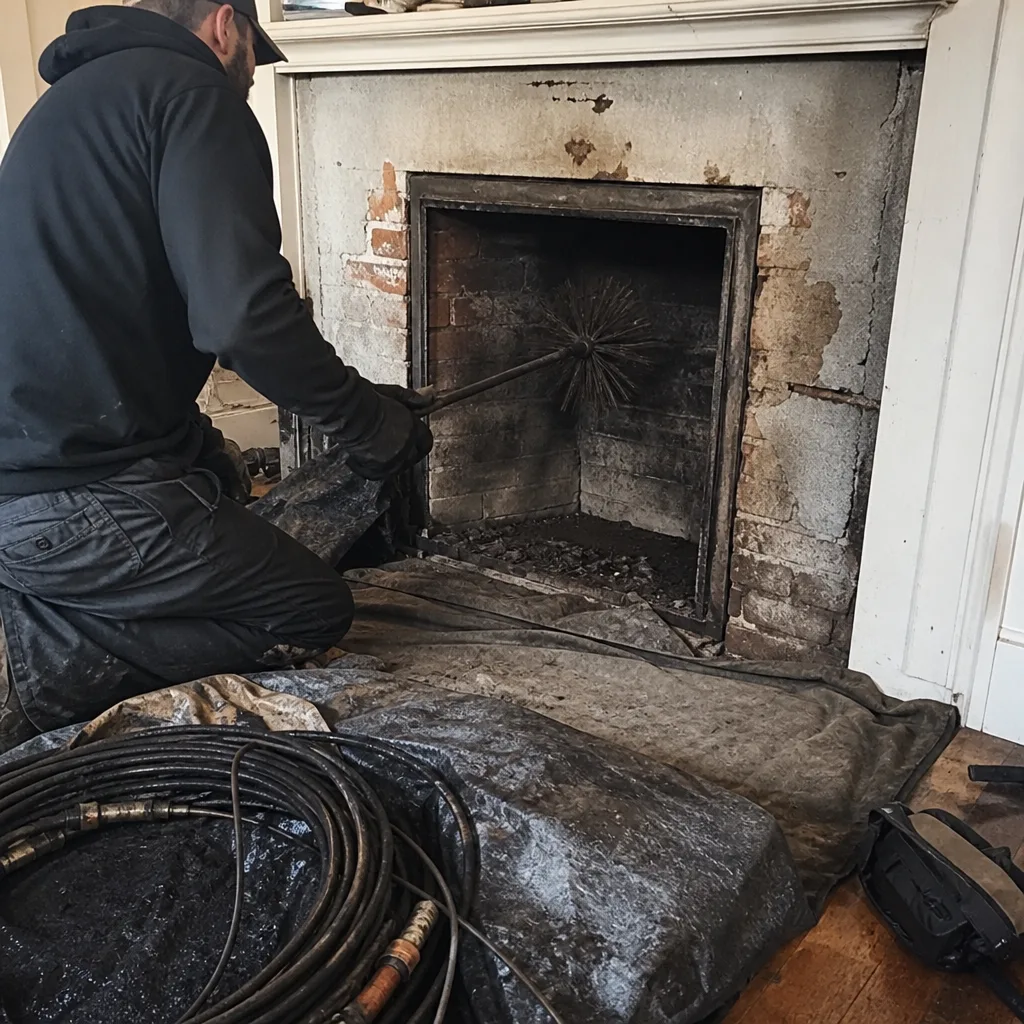 Before
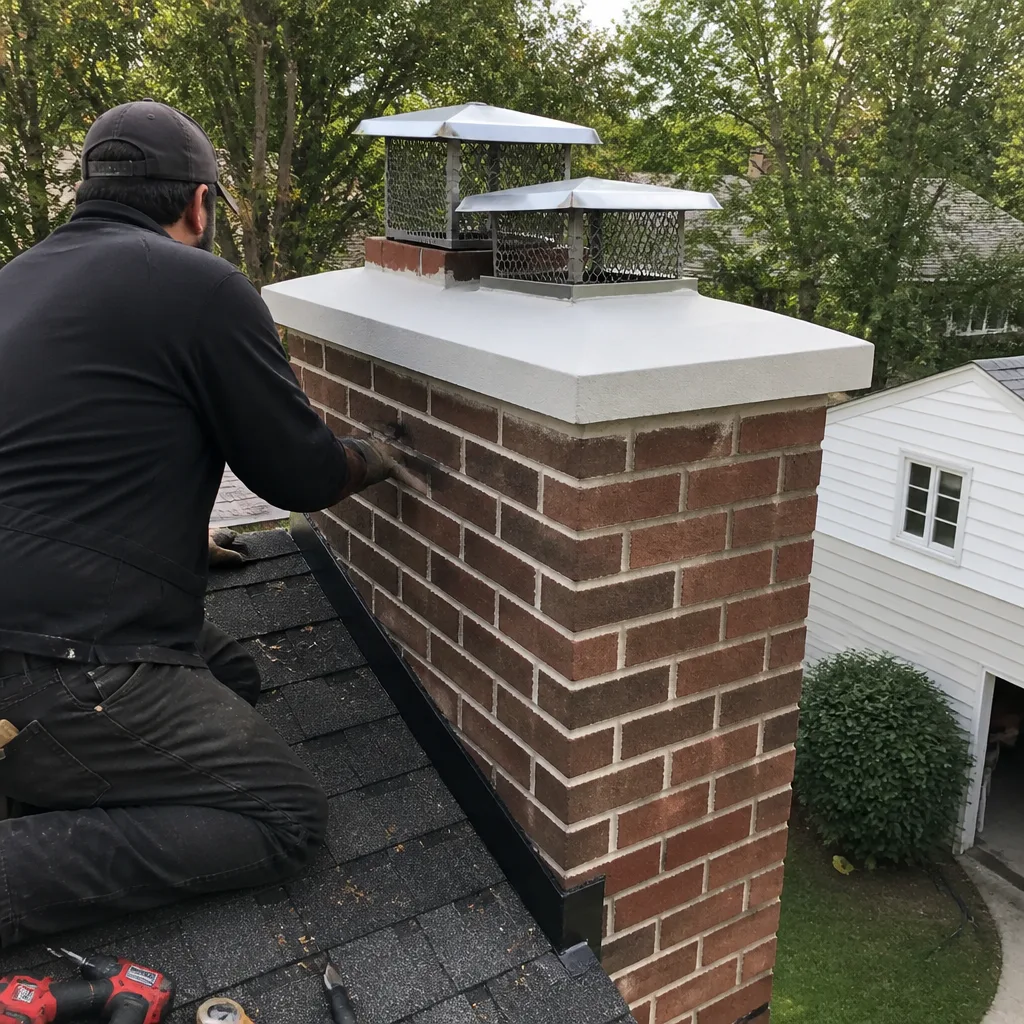 After
After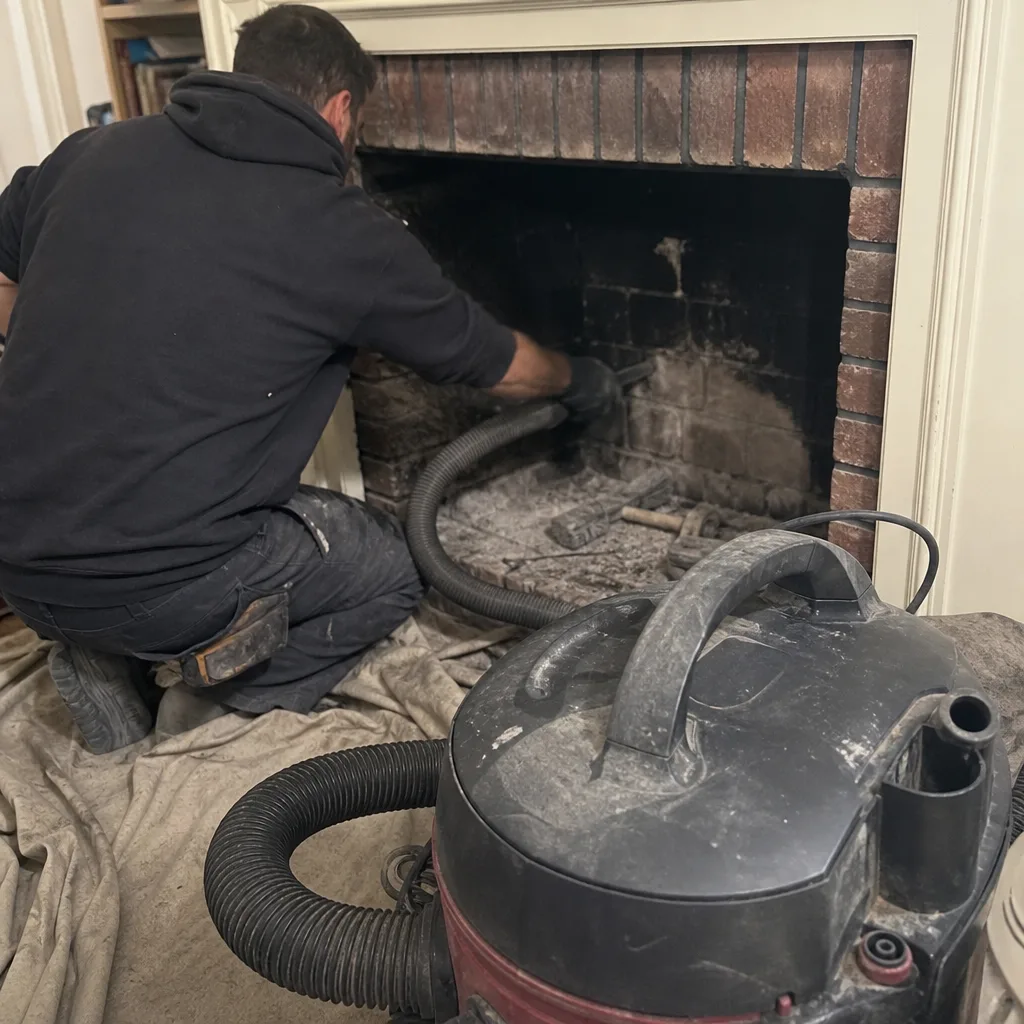 Before
 After
After Before
 After
After